
The New HR in the Age of AI Teaming – A New HR Is Coming
By Dr. Eric L. Demirjian
Let’s face it, HR practitioners are no strangers to reinventing work. We’ve survived the punch clock, the open office, the dreaded fax machine, and even the rise of Zoom. But the next evolution of work isn’t just about new gadgets or policies, it’s about entirely new artificial intelligence (AI) teammates. Not human teammates, not contractors, not freelancers, but AI teammates driven to increase human productivity through human-machine collaborations, fully autonomous AI work partners, and Superteams.
This isn’t the stuff of sci-fi movies where Skynet replaces your payroll team, rather it’s like a Marvel movie in a workplace setting: humans and AIs teaming up to fight the villains of inefficiency, low quality of work life, and performance burnout. The future of HR needs a brand-new category of work, a new HR dedicated to humans, AI, and AI teaming.
That means rethinking HR structures, strategy, and leadership for a future where human-AI teams and Human-Autonomous Teams (HATs) are not an exception but the norm. HR will be hiring, training and developing hybrid teams where humans and AI bring different strengths to the table, and where success depends on how well the two sides learn to trust and collaborate to maximize the work each does best.
Let’s take a closer look at this future HR Marvel Movie through the lens of Melissa, a modern HR leader, recruiter, and overall HR superhero!
The Age of Recruitment in the AI Era
Recruitment is about to become the frontier where HR meets sci-fi and Melissa is our new fearless leader. Forget scanning resumes for “5 years of Excel.” Tomorrow’s job postings may ask for “proficiency in collaborating with AI Agents,” “Identifying when your human or AI partner is lying,” or “building the ability to manage outputs from AI teaming systems.”
HR recruiters like Melissa won’t be working alone, either. AI recruiting platforms will screen candidates for not only skills but also AI teaming readiness. Can the candidate successfully work with our teams current AI virtual teammates, have they used AI to augment work in the past, can they describe a time AI gave them a bad suggestion and how they course-corrected?
Picture the HR interview room of the future where Melissa is our fearless human leader: Melissa, the candidate, and the AI recruiting agent sitting in the corner analyzing every answer in real time. When Melissa asks, “Where do you see yourself in five years?” the AI might quietly whisper, “Statistically, probably teaming with me to take over that underperforming compensation group”. Recruitment in the AI era won’t replace humans in HR or in the workplace. It will redefine their role as teammate builders, culture shapers, and human-AI matchmakers.
Job Design, Enlargement, and Enrichment: The Director Role
In today’s jobs, employees are often “doers.” In tomorrow’s jobs, they’ll be more like AI teaming directors. Their role won’t always be to execute tasks but to orchestrate human and AI teammates to execute tasks with them. That’s why Melissa will have to start addressing job enlargement and job enrichment through a futuristic lens. Done right, Melissa can lead HR to design roles that feel more empowering and fulfilling. Done wrong, and HR risks employees feeling like button-pushers whose only job is to “approve what the AI already decided.” HR’s challenge will be to balance the mix, so humans remain creators, not just editors.
Training and Development: Teaching Humans How to Work with Bots
In the AI teaming era, the content of training will look radically different. Employees will learn more than “how to do their job.” Melissa and the new HR AI team will need to teach humans how to do their job alongside AI.
Imagine Melissa and her rock star HR team rolling out modules like:
- Delegating to AI 101: When to Trust the AI team and When Not To.
- AI Etiquette: How to Talk to Your AI agent Without Yelling IN ALL CAPS.
- The Buddy Cop Model: Why You’re Danny Glover and Your AI Is Mel Gibson.
This isn’t just about technical AI skills; it’s about building comfort and confidence with your HR team and organizational employees. Employees will need to learn how to team with AI, push back against AI recommendations when necessary, and integrate machine teammates into their workflow as naturally as they once integrated email, interns, and the occasional happy hour. HR becomes the teacher, coach, and referee in this new AI classroom.
Compensation in the AI Age
Let’s use our crystal ball to examine one critical question Melissa and her cadre of HR compensation specialists will lose sleep over in the future. If AI teammates enable employees to be twice as productive, who gets the credit? HR leaders will soon have to examine how to reward employees with higher pay who master AI teamwork. To accomplish this, future human performance reviews will need a new category to address and manage AI teaming proficiency. HR leaders will also have to innovate and evolve compensation plans to recognize human creativity and judgment over sheer output. In fact, AI teaming output may increasingly be one of the most important metrics in successful organizations in the future. Therefore, ask yourself, how would your organizations design in “shared AI teaming savings”, where AI-driven efficiency improvements are tied directly to human rewards, into compensation. Melissa and her team are working on reimagining a bonus pool that grows every time humans and AI save money, cut waste, or innovate together.
Change Management: From Shock to Normal
When email arrived, people complained it would kill real communication. When remote work arrived, people swore collaboration was impossible without cubicles. Every big shift brings resistance. AI teaming will be no different. Employees will struggle with questions of identity: “Am I still valuable if AI does 40% of my job?”, “What happens if the AI makes a mistake and I’m blamed?”, “Do I need to treat my AI like a colleague… or like my stapler?” Melissa’s role will be to guide her organization through this transition, acknowledging fear, providing clear expectations, and creating spaces for open dialogue. Change management won’t just be about rolling out new technology systems, it will be about reshaping the culture of work itself.
Relationship Management: Trusting the Algorithm
Here’s the awkward part: we’re going to need to learn how to build relationships with AI teammates. Do you have to buy your AI agent and AI teammate a birthday cake or ask it how its weekend went? Maybe or maybe not, but don’t laugh, because you and your teams will need to know how to develop trust, hold it accountable, and collaborate effectively, just like a human. HR’s job will be to set the ground rules: What decisions can AI make alone? What decisions always require human oversight? How do we resolve conflicts when human judgment” and AI outputs disagree? The oldest HR skill, managing relationships, will remain just as relevant. The only difference is that one of the “people” at Melissa’s table might be an AI agent.
Counseling and Well-Being: Humans Need More Than Metrics
As AI reshapes jobs, organizations, and teams, Melissa and her HR department must recognize the emotional and quality of work side. Employees may feel displaced, undervalued, or even anxious about their future. Counseling and support programs will be vital, not just for mental health, but for career identity. Imagine HR offering sessions like “Coping with Your AI Teammate Who Never Sleeps” or “Dealing with ‘Algorithm Envy’: Why Your AI Got Employee of the Month”. Humor aside, the truth is employees will need reassurance. HR’s role will be to help them see AI not as competition, but as augmentation, freeing them to do work that requires uniquely human strengths.
The AI Characteristics Model
Hackman & Oldham’s famous Job Characteristics Model emphasized skill variety, task identity, significance, autonomy, and feedback. In an AI teaming world skill variety may expand to employees managing both human and machine tasks, task identity may evolve to work co-produced by human + AI, and task significance may increase with human work focusing on creativity, ethics, and strategy. It’s a new AI and Human teaming model, and Melissa’s HR team will need to teach their organization how to use it wisely.
Closing Credits: HR as the Director of Superteams
The future of HR is not about preventing AI from entering the workplace, it’s about teaching organizations how to team with AI effectively. From recruitment to compensation, from counseling to relationship management, HR will be the architect of how humans and AI coexist in productive, meaningful ways. HR will need to balance fear with opportunity, structure with creativity, and autonomy with accountability. And yes, it will feel strange at first. But so did Zoom happy hours. So did remote work. So did every major workplace change before this. If Hollywood has taught us anything, it’s that the best stories are about unlikely teammates learning to work together. In the AI age, HR will be the director of that story, assembling Superteams where both humans and machines bring out the best in each other. HR won’t just manage employees anymore, HR will manage the future of all workers to include AI and humans. To borrow a quote from our favorite Marvel “Rapid Resolution Protector” to describe Melissa’s new HR AI team: “HR Smash”.
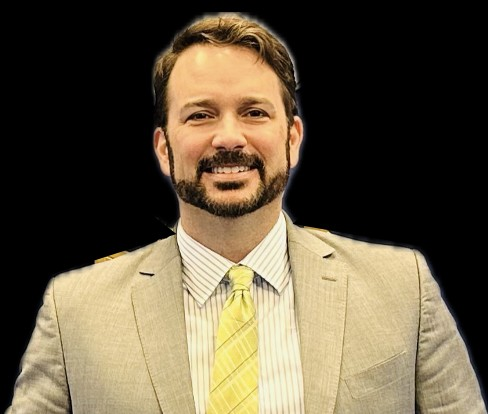
Dr. Eric L. Demirjian
Dr. Eric L. Demirjian is a research fellow for the Center for Innovation Management and Business Analytics at the Florida Institute of Technology, specializing in Superteams, artificial intelligence teaming, and artificial intelligence job augmentation. Eric has 23 years of experience in aerospace engineering, artificial intelligence, modeling and simulation, and leading teams in the creation of solutions for the defense, wine, whiskey, aerospace, intelligence, and test and evaluation industries. Contact him at: [email protected]